

Picking the wrong box size costs you money. It can also damage your product during transit.
This guide covers standard shipping boxes sizes, what fits in each one, and how to pick the right size every time.
You will also learn how box size affects your shipping bill. I have worked with e-commerce sellers who overpaid simply because their boxes were too big.
We keep it simple, practical, and straight to the point. By the end, you will know exactly which box to use and why.
Standard Shipping Boxes Sizes Chart Overview

Before getting into individual sizes, it helps to understand how boxes are grouped. Standard shipping boxes fall into small, medium, and large categories.
Dimensions are always written as Length x Width x Height. Small boxes handle compact, lightweight items.
Medium boxes work for most everyday products. Large boxes cover bulky or multi-item orders.
Carriers build their entire systems around these standard sizes. Using them keeps your shipping process faster, cheaper, and more predictable from one order to the next.
11 Standard Shipping Boxes Sizes Explained With Perfect Uses
Here is a breakdown of the most common standard shipping boxes sizes, what they fit, and why they work well for those products.
1. 4 x 4 x 4 Inches – Jewelry and Micro Items

This is one of the smallest standard sizes available. It fits rings, earrings, USB drives, and other tiny items with ease.
The snug fit reduces movement inside the box, keeping small products safe during transit.
2. 6 x 4 x 3 Inches – Cosmetics and Sample Products

This size is popular with beauty and skincare brands. It fits perfume samples, skincare kits, and small product bundles without any wasted space.
The flat rectangular shape keeps products upright and fits easily into standard courier pouches.
3. 8 x 6 x 4 Inches – Apparel Accessories and Books

This is a reliable mid-small size that handles a wide range of everyday products. It fits wallets, folded T-shirts, and paperback books without needing extra filler.
It is light enough to qualify for lower shipping rates while still protecting soft goods well.
4. 8 x 8 x 8 Inches – Candles and Home Decor Items

The cube shape makes this box ideal for round or square products. It works well for glass candles, mugs, and small decorative pieces that need padding on all sides.
The equal dimensions make it easy to add protective cushioning without gaps.
5. 10 x 8 x 6 Inches – Gift Boxes and Subscription Kits

This is a go-to size for subscription box businesses and gifting brands. It fits monthly product kits, curated gift sets, and mixed product bundles with room to arrange items neatly.
There is also space to add tissue paper or filler, which improves the unboxing experience.
6. 10 x 10 x 10 Inches – Small Kitchen Appliances

This square box handles medium-weight appliances and compact gadgets well. It fits mini blenders, compact toasters, and small electronic devices along with their original packaging.
The extra depth gives enough room for the product and any cords or attachments.
7. 12 x 9 x 6 Inches – Footwear Packaging

This is the standard size used for most adult shoe boxes. It fits sneakers, sandals, and kids footwear with just enough room for a layer of protective wrap.
The length and width match most standard shoe sizes, making it a reliable choice for footwear sellers.
8. 14 x 10 x 8 Inches – Gaming and Electronics Bundles

This size handles heavier and more sensitive items that need extra protection. It works well for gaming consoles, controllers, cables, and tech starter kits packed together.
Double-wall corrugated cardboard is recommended here to protect electronics from shock during shipping.
9. 16 x 12 x 8 Inches – Office Supplies and Documents

This flat, wide box is built for paper-based and office-related goods. It fits files, folders, three-ring binders, and small office equipment without bending or creasing.
The flat profile also moves smoothly through standard freight systems without needing special handling.
10. 18 x 14 x 10 Inches – Household Goods

This size covers larger everyday items that do not quite need a freight box. It works well for kitchenware sets, decorative storage items, and bundled home goods.
It is large enough for multi-piece sets but still easy to handle during packing and delivery.
11. 24 x 18 x 18 Inches – Bulky and Fragile Shipments

This is one of the largest standard sizes and is built for oversized or fragile products. It fits floor lamps, large bedding sets, and big fragile goods that need generous padding on all sides.
Double-wall or heavy-duty corrugated cardboard is strongly recommended for this size.
How to Choose the Right Shipping Box Size

Choosing the right box is not guesswork. Follow these steps to get it right every time.
Measuring Product Dimensions Correctly
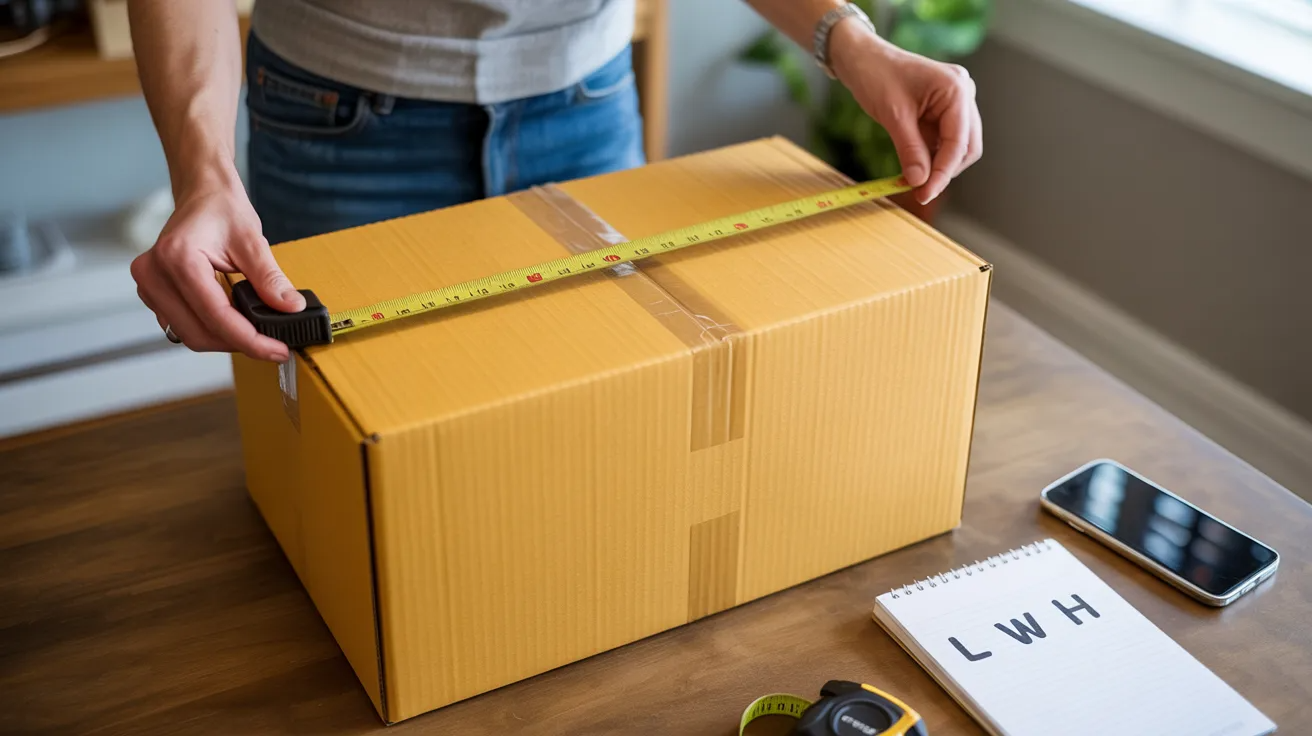
Use a tape measure to get the exact length, width, and height of your product at its widest points. Round up to the nearest inch to avoid a tight fit.
For irregular shapes, measure the bounding box around the item to find the minimum size needed.
Adding Padding and Protection Space
Never pack your product tight against the box walls. Add at least 1 to 2 inches of space on each side for bubble wrap, foam, or packing peanuts.
That buffer absorbs impact during transit and is especially important for glass or electronics.
Matching Box Size With Weight and Fragility
Heavy items need a stronger box, not just a bigger one. Choose double-wall corrugated cardboard for anything over 20 pounds.
Fragile items may need a medium box even if the product is small, just to fit enough protective cushioning inside.
Avoiding Oversized or Undersized Packaging
An oversized box wastes money on DIM weight and excess filler material. An undersized box puts your product at risk of damage.
The right box fits your product snugly with 1 to 2 inches of padding on every side.
Tips for Choosing the Right Standard Shipping Boxes Sizes
Small changes in how you pick and use boxes can make a big difference in cost and product safety.
- Always measure your product dimensions before selecting a box
- Leave 1 to 2 inches of space on each side for protective cushioning
- Use double-wall boxes for heavy or fragile items
- Avoid empty space to reduce DIM weight costs
- Match box size with shipping distance and carrier rules
Conclusion
Getting standard shipping boxes sizes right is one of those small things that saves you real money over time.
I have seen sellers cut their shipping costs just by switching to a better-fitting box. It is not complicated, but it does take a little attention upfront.
Start with your product dimensions, add your padding, and pick the closest standard size.
That simple process protects your items and keeps costs in check. If this helped you, leave a comment below or share it with someone who ships products regularly.
Frequently Asked Questions
What are the most common shipping box sizes?
The most commonly used sizes are 6 x 4 x 3, 10 x 8 x 6, and 14 x 10 x 8 inches. These cover most retail, e-commerce, and subscription box needs without any issue.
How do I choose the right shipping box size?
Measure your product's length, width, and height first. Then add 1 to 2 inches on each side for padding and match that to the closest standard size available.
Does box size affect shipping cost?
Yes, it does. Carriers use DIM weight pricing based on box volume, so a larger box can increase your shipping charge even if the item inside is light.
What box is best for fragile items?
A double-wall corrugated box with at least 2 inches of cushioning on all sides works best. The 8 x 8 x 8 or 14 x 10 x 8 inch sizes are good options depending on item size.
Can I reuse old shipping boxes?
You can reuse boxes if they are in good condition with no crushed corners or weakened walls. Always remove or cover old labels before sending to avoid any delivery confusion.