
Moving is already stressful, and the last thing you need is a dented pan or a cracked lid waiting for you on the other side. I've packed up my own kitchen more than once, and doing it wrong costs you time, money, and frustration.
This guide on how to pack pots and pans for moving covers the right materials, smart wrapping methods, space-saving tricks, and the mistakes most people make.
I've kept everything simple and practical so you can get it done fast, without second-guessing yourself every step of the way.
Kitchen Packing Basics You Should Know
Before you start wrapping anything, knowing the basics saves time and protects your cookware. Pots and pans are heavy and oddly shaped, so without proper packing, lids crack, non-stick coatings scratch, and items shift inside boxes.
The main risks during a move are dents, scratches, and damage to other packed items caused by heavy cookware sliding around. Stacking without any padding between pieces makes all of this worse.
The good news is that organized packing fixes most of these problems. When everything is packed with care, unpacking is faster, nothing gets lost, and your cookware arrives in great condition.
Necessary Supplies for Packing Pots and Pans
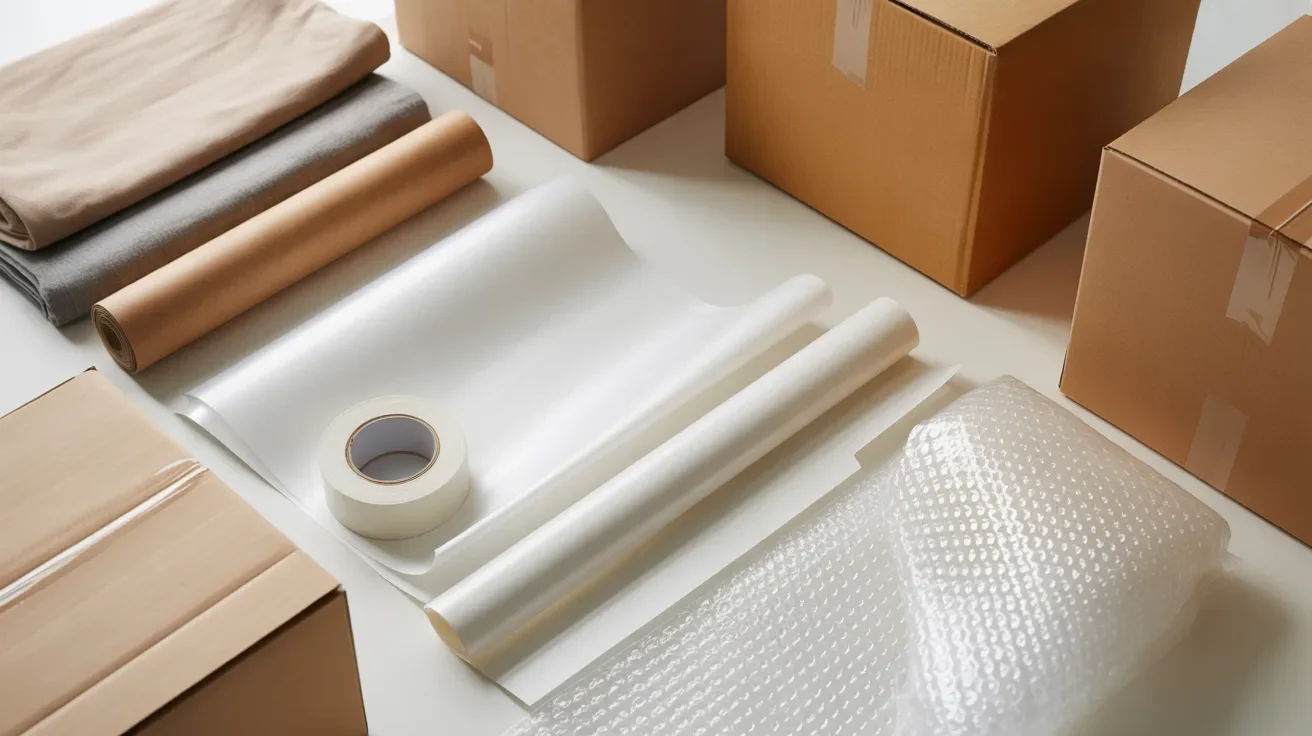
Having the right materials on hand makes the entire packing process faster and safer.
Must-Have Packing Materials
You don't need anything fancy. Here's what works best
- Medium or large boxes or dish pack boxes
- Packing paper or bubble wrap
- Strong packing tape
- A marker for labeling
Dish pack boxes are thicker than regular boxes. They hold up better with heavy cookware inside.
Alternative Household Items You Can Use
No packing paper? No problem.
Use what you already have:
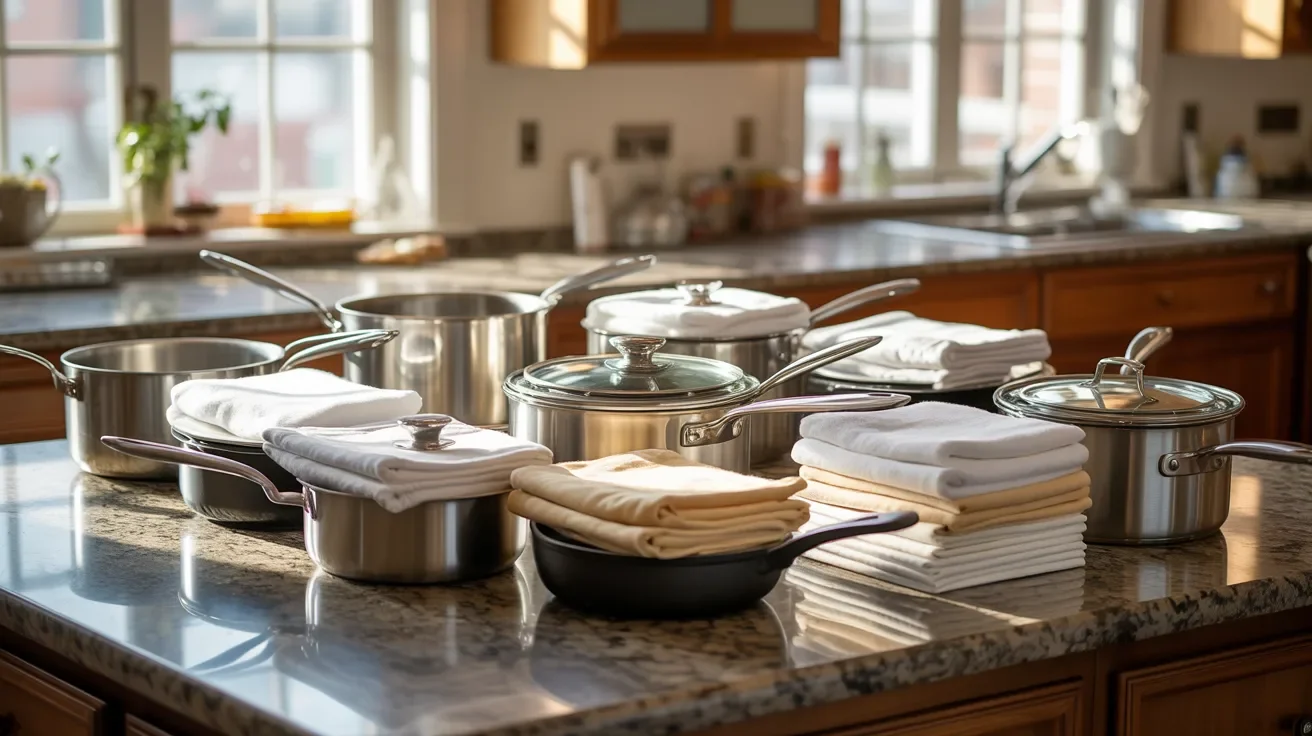
- Old towels and blankets
- Clothing like sweaters or thick shirts
- Kitchen cloths and oven mitts
These work well as padding and save you money on supplies.
Step-by-Step Guide to Pack Pots and Pans
Follow these five steps to pack your cookware safely and efficiently.
Step 1: Sort and Prepare Your Cookware
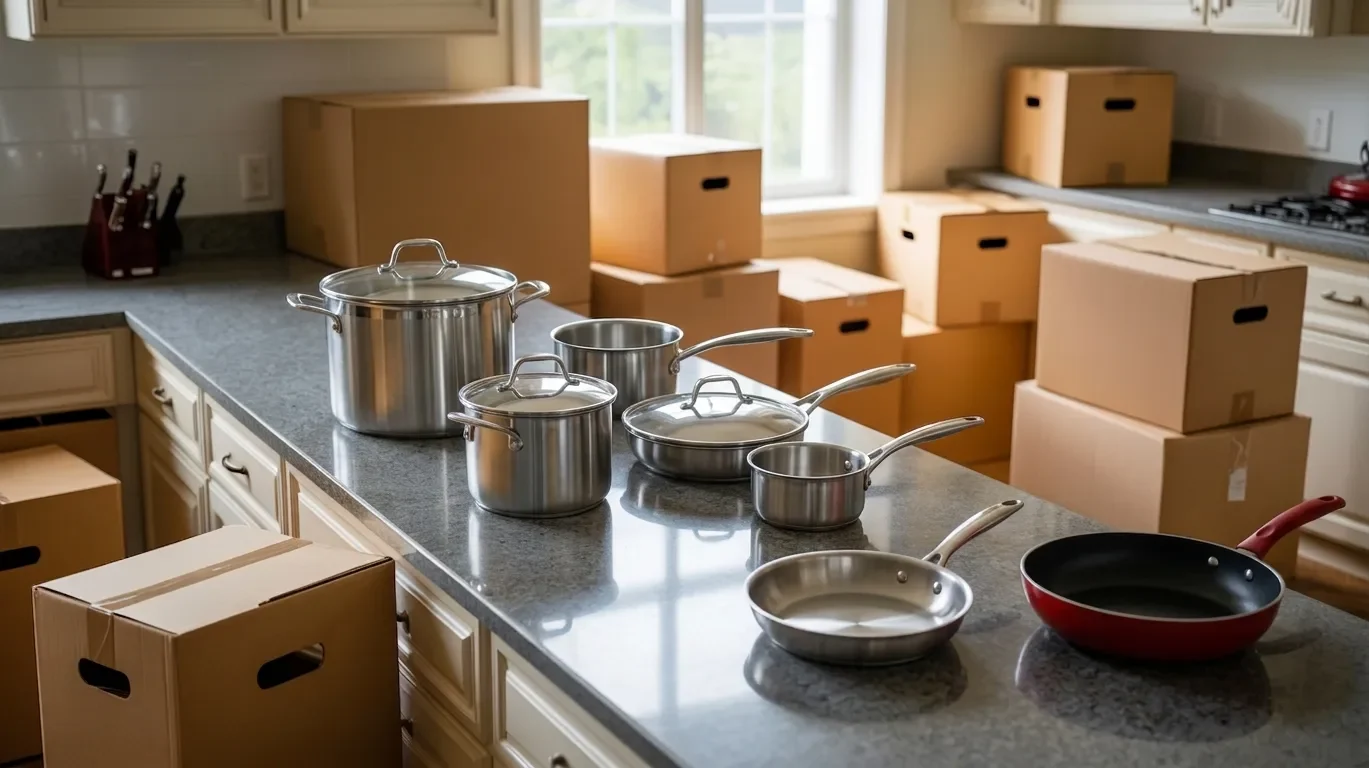
Start by pulling everything out. Sort by size. Set aside anything you won't need until after the move. This is also a good time to get rid of items you no longer use. Fewer items mean fewer boxes.
Step 2: Wrap Pots, Pans, and Lids Properly
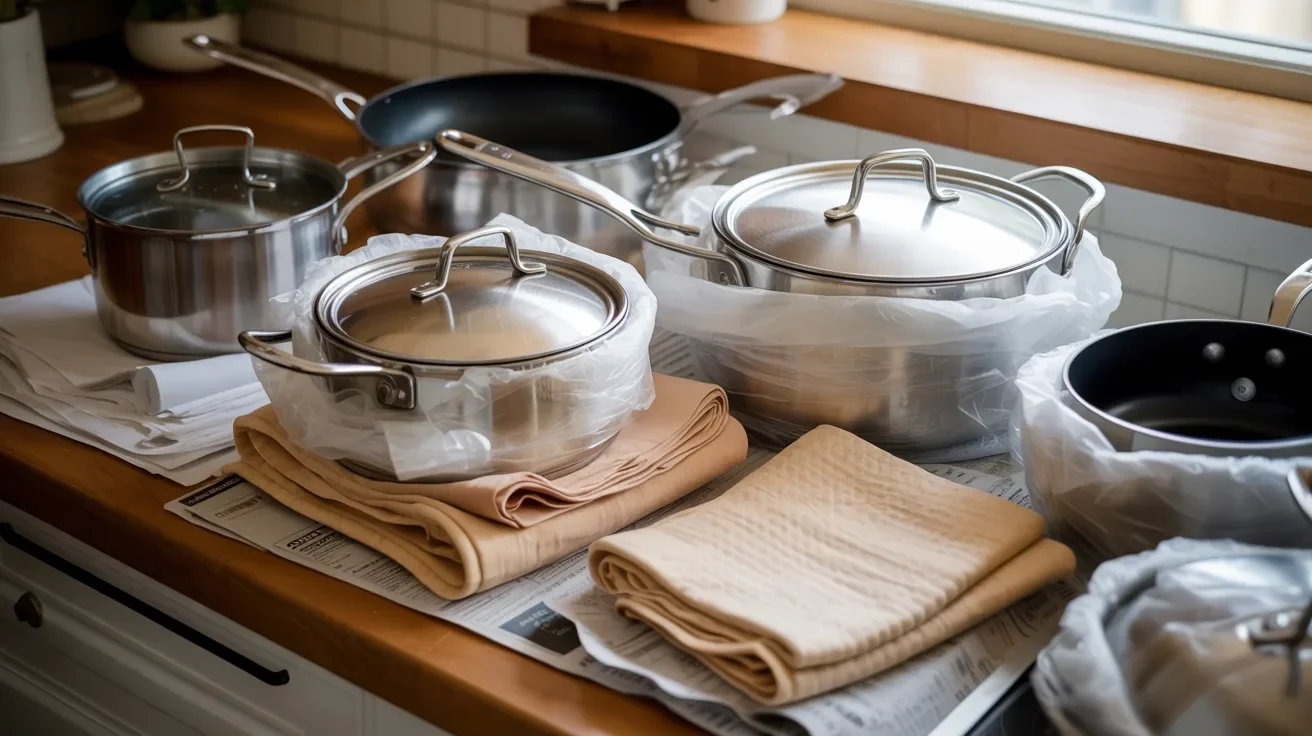
Wrap each pot and pan in packing paper or a soft cloth. Give lids their own wrap. Lids are fragile and crack easily if they knock against metal.
Secure the wrap with a small piece of tape so it doesn't unravel.
Step 3: Nest and Organize Efficiently
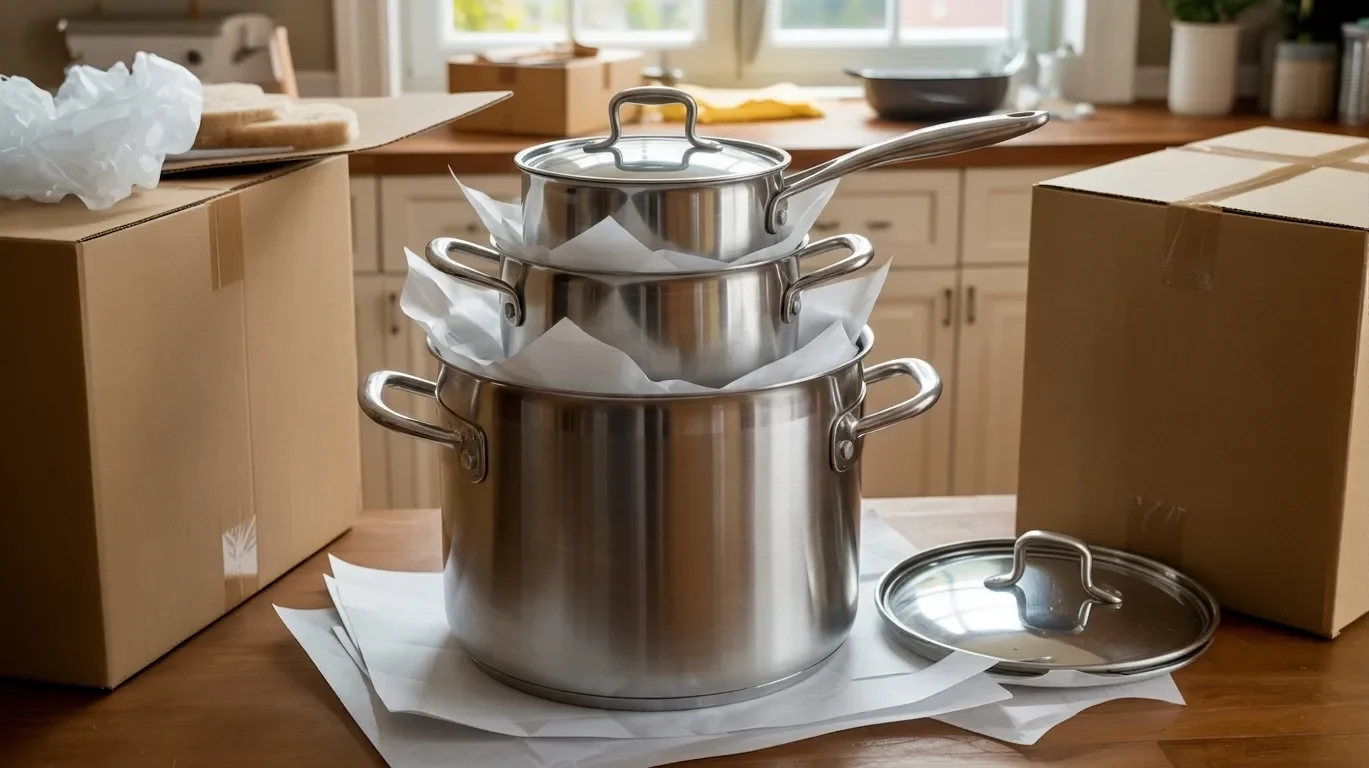
Place smaller pots inside larger ones. This saves space. Put a layer of packing paper or a cloth between nested items to prevent scratches.
Keep lids separate or place them vertically in the box with padding around them.
Step 4: Pack Boxes with Proper Weight Balance
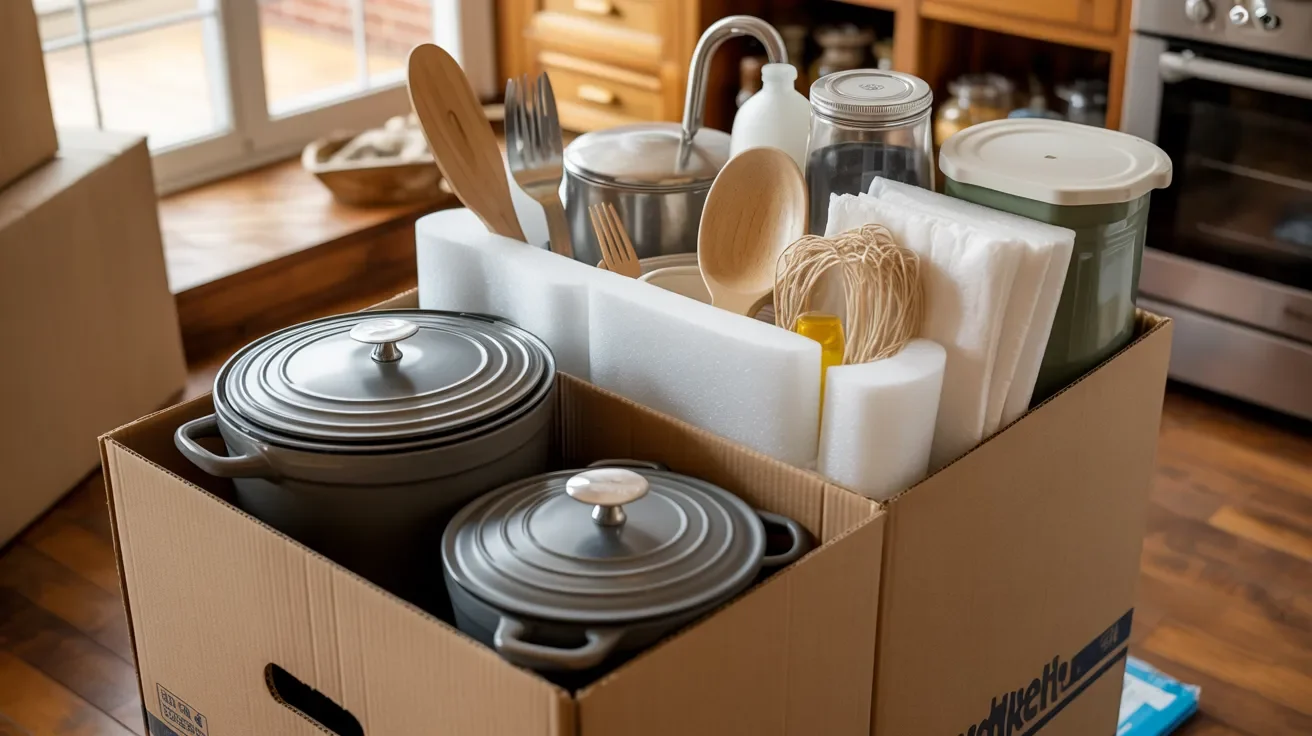
Heavy pots go at the bottom. Lighter items go on top. Don't stack too many heavy pieces in one box. A box that's too heavy is hard to carry and more likely to drop.
Aim for boxes you can lift without straining.
Step 5: Seal and Label Clearly
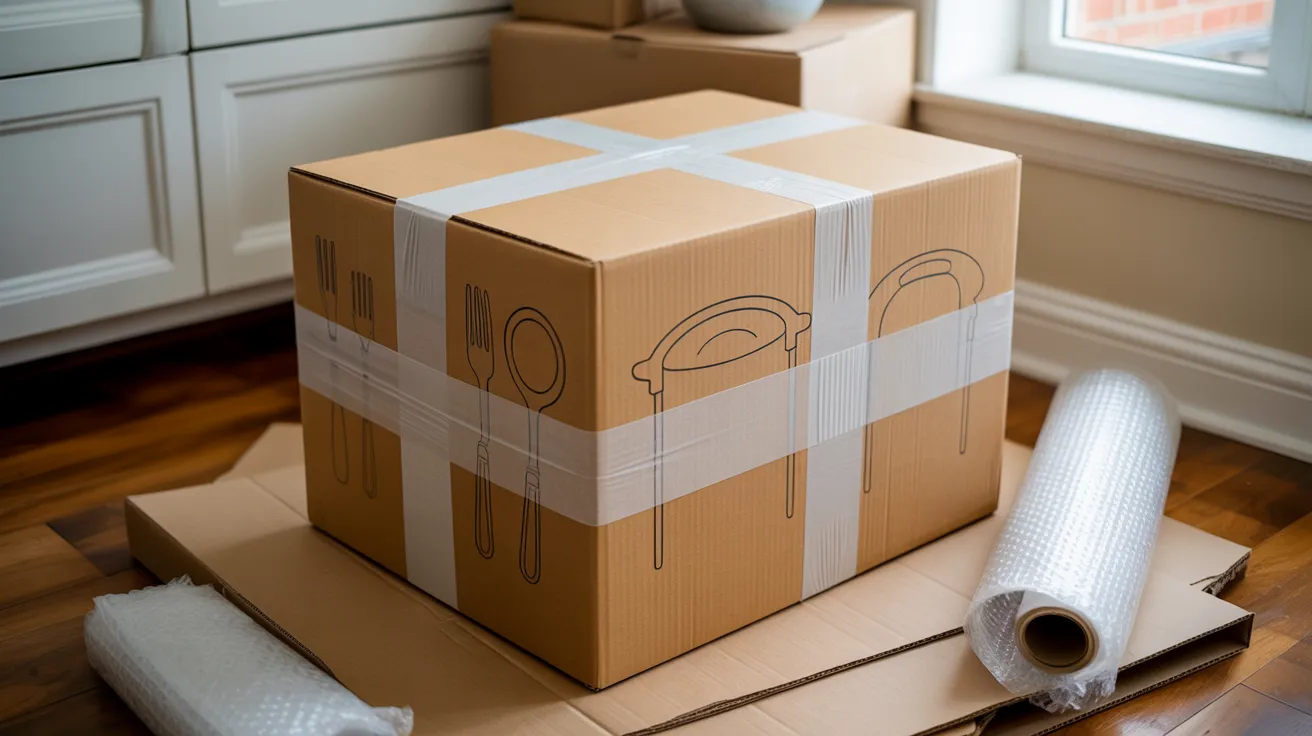
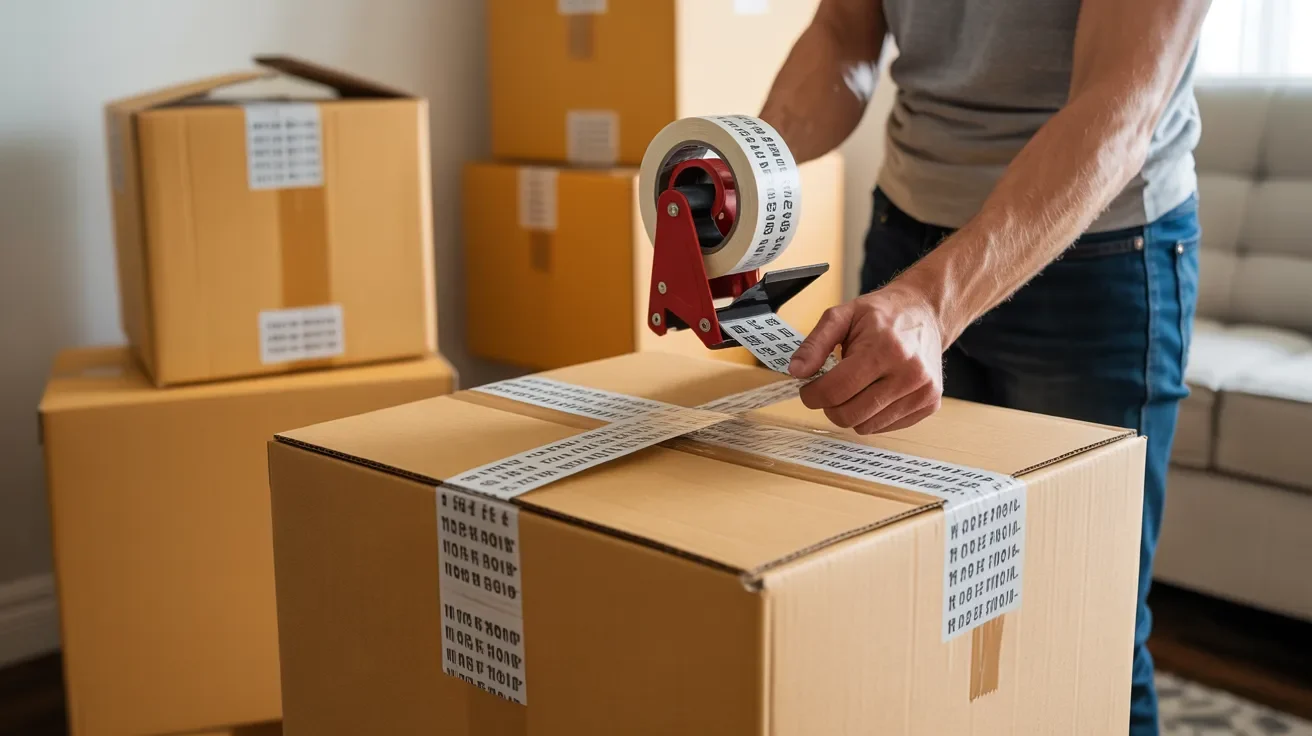
Once packed, seal the box with strong tape. Label it with the word "Kitchen" and add "Heavy" if needed. If lids are in a separate box, write that too.
This helps movers handle it correctly and helps you unpack faster.
Pro Packing Techniques to Save Space and Prevent Damage
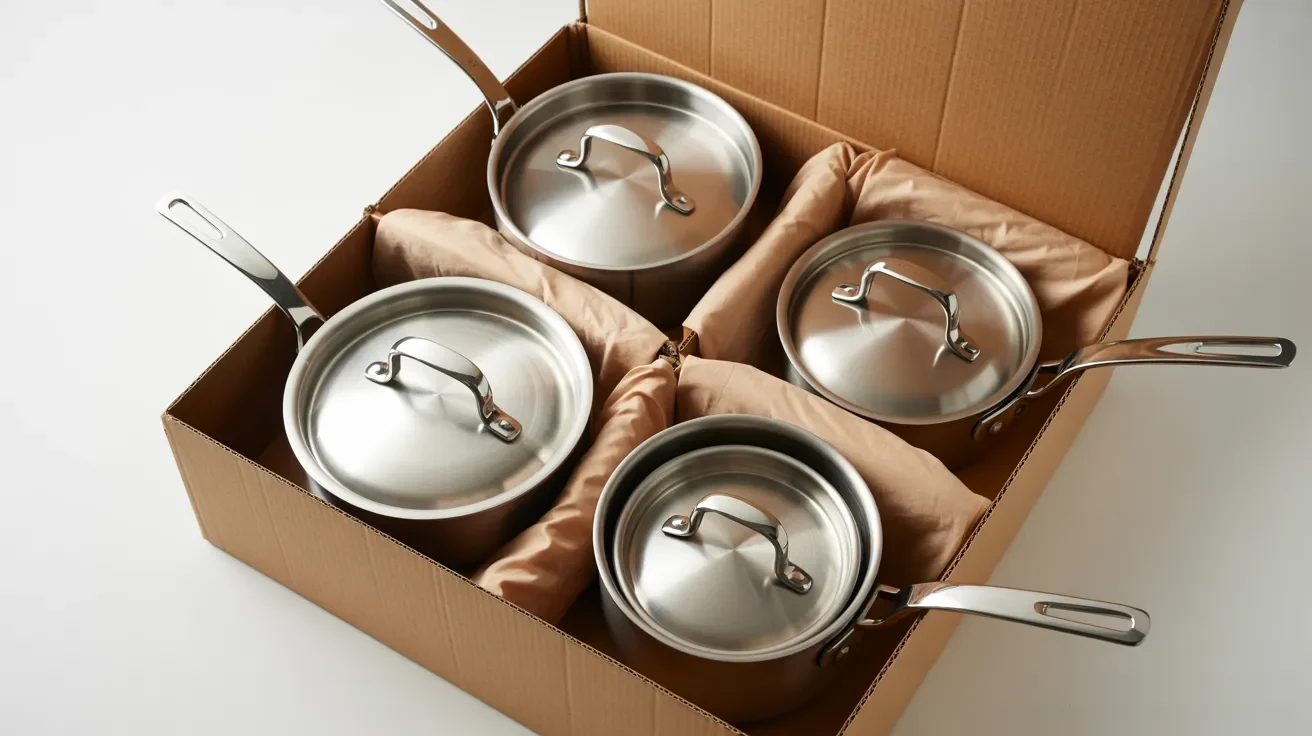
A few smart tricks can protect your cookware and free up a surprising amount of box space.
Nesting Pots and Pans the Right Way
Always nest from largest to smallest. Place packing paper inside each pot before sliding another one in. This creates a buffer. Without it, metal hits metal and scratches happen fast.
Using Pots as Storage Containers
Your pots are hollow. Use that space. Small kitchen items like measuring cups, spice jars, or silicone tools can go inside pots. Just wrap them first and fill gaps with paper so they don't rattle around.
Filling Empty Spaces for Extra Protection
Empty spaces inside a box let things shift. Fill every gap with crumpled packing paper, cloth, or even socks. The goal is a box where nothing moves when you shake it gently.
Common Mistakes to Avoid When Packing Cookware
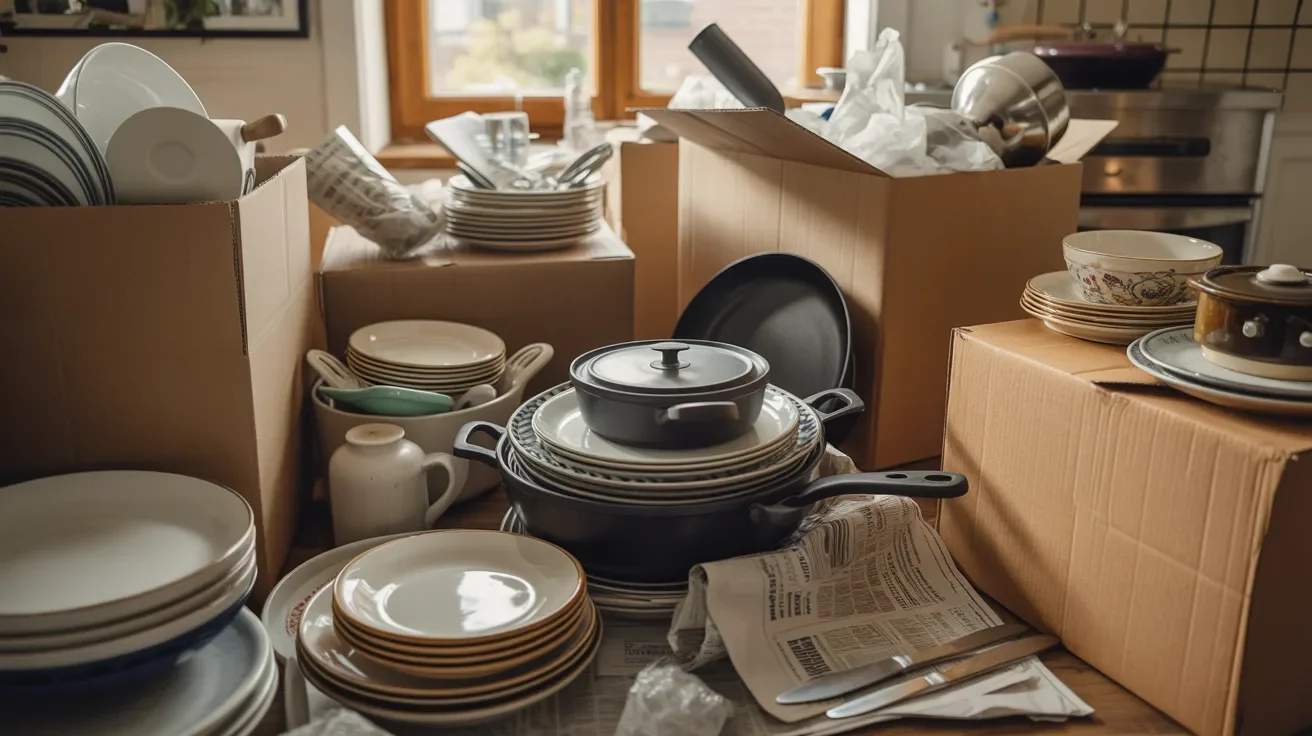
Small errors during packing can lead to big problems during the move.
Overloading Boxes Beyond Safe Weight
A full box of pots can get very heavy very fast. Overloaded boxes break at the bottom or become impossible to carry safely. Split heavy items between two boxes if needed.
Skipping Cushioning Materials
Packing pots without any padding is one of the most common mistakes. Even short moves involve bumps and vibrations. Always add a layer of protection between items.
Improper Layering of Items
Never put heavy pots on top of pans or lids. Heavier items always go at the bottom. Lighter, more fragile items go on top. This basic rule prevents most damage.
Expert Tips for a Smooth Moving Experience
These small habits make unpacking easier and your move much less stressful.
- Write specific labels on each box, like "Pots and Lids" or "Baking Pans," not just "Kitchen."
- Clear labels save time when you're tired after a long moving day.
- Use dish pack boxes for heavy cookware like cast iron or stainless steel.
- Dish pack boxes have double-thick walls built to handle the extra weight safely.
- Before unpacking, decide where each item will go in your new kitchen.
- Group pots and pans near the stove and keep lids together to avoid sorting later.
Conclusion
Packing pots and pans doesn't have to be a big deal. With the right materials, a clear plan, and a few smart habits, you can get your cookware from one kitchen to the next without any damage.
I packed my own kitchen last year using these exact steps, and everything arrived in perfect shape. Start early, take your time, and don't skip the padding.
If this guide helped you, leave a comment below or share it with someone who has a move coming up!
Frequently Asked Questions
How many pots and pans can I fit in one box?
It depends on the size of the box and the weight of your cookware. A medium box usually holds three to five pieces comfortably without becoming too heavy to carry.
Can I pack pots and pans without packing paper?
Yes. Towels, clothing, and kitchen clothes work as substitutes. The goal is to keep items from touching each other directly, so any soft material helps.
Should lids be packed separately from pots?
It's usually safer to pack lids separately. Wrap each one and store them upright in a box with padding around them. This lowers the chance of cracking.
Is it okay to leave items inside pots while moving?
You can store small, lightweight items inside pots. Just make sure they're wrapped and can't shift around. Avoid anything breakable or heavy that could damage the pot.
How do I protect non-stick pans during a move?
Place packing paper or a soft cloth between each non-stick pan. Never stack them directly on top of each other. Even light scratches can damage the coating permanently.